TL;DR
The major online ad platforms for eCommerce split into intent platforms (Google, Microsoft, Amazon) that capture existing demand and interruption platforms (Meta, TikTok, Pinterest, Reddit, Snapchat) that create it. Choosing a platform is choosing a traffic temperature, and traffic temperature decides which landing page format you need: direct-offer pages for warm search traffic, advertorials and listicles for cold feed traffic. Most DTC brands should run one platform properly before adding a second.
Choosing a paid ad platform is choosing a traffic temperature, and traffic temperature decides what page you need behind the ad. That’s the through-line most platform guides miss. They stop at “here are the ad formats” and never say that a TikTok click and a branded Google search click are different people who need different pages.
This guide covers the platforms DTC brands actually use: who each one reaches, what it costs, and what it demands of your landing page. Then it maps platform to page format, and budget tier to platform mix.
Key Takeaways
- Intent platforms (Google Search, Shopping, Microsoft, Amazon) reach people already looking. Feed platforms (Meta, TikTok, Pinterest, Reddit, Snapchat) reach people who weren’t. The second group is colder and needs a page that earns the decision.
- Google Ads search CPCs across industries sit in the low-to-mid single digits; Meta and TikTok CPCs typically run under $2. Benchmarks as of September 2026 and your account will vary.
- Google rates your landing page experience as an auction-time signal that affects Ad Rank and what you pay per click, and reports it in the Quality Score diagnostic. Meta has no Quality Score but enforces landing page policies and can restrict accounts over them.
- Cold feed traffic converts on advertorials and listicles. Warm search traffic converts on direct-offer pages. Retargeting converts on offer-led pages. Send each platform to the format its temperature calls for.
- Under $5K a month, run one platform properly. Add a second at $5K to $25K. Test native, programmatic, and retail media above $25K.
How to think about platform choice
Two axes decide most of it: intent vs interruption, and traffic temperature.
Intent vs interruption
Search and shopping platforms are intent platforms. The person typed a query. They already want something, and the ad’s job is to be the best answer. Feed platforms are interruption platforms. The person was scrolling. They didn’t want anything, and the ad’s job is to make them want it.
That difference changes everything downstream: the creative, the bidding, the CPC, and the page.
Traffic temperature by platform
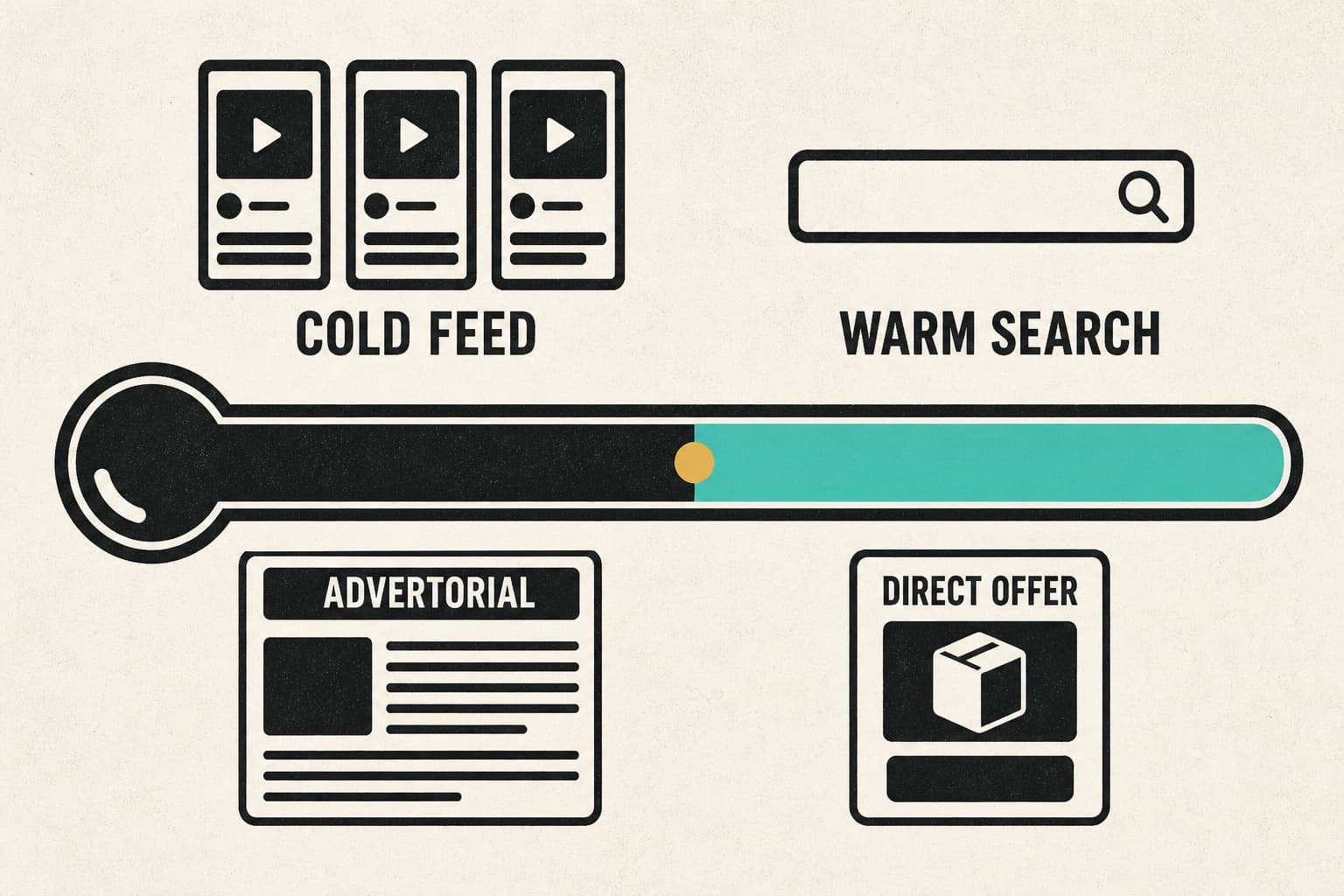
Cold traffic has never heard of you. Warm traffic knows you exist. Hot traffic is coming back to buy. Platforms cluster on that spectrum:
| Temperature | Platforms | What the click means |
|---|---|---|
| Hot | Branded Google Search, retargeting on any platform | They know you and are deciding |
| Warm | Non-brand Google Search and Shopping, Microsoft, Amazon | They want the category, not necessarily you |
| Cold | Meta prospecting, TikTok, Pinterest, Reddit, Snapchat, native | They didn’t want anything until the ad |
The page behind a hot click can ask for the sale immediately. The page behind a cold click has to make the case first. This is the framework the rest of the article uses.
Where your budget tier puts you
Platform breadth follows budget. A brand spending $3K a month can’t learn anything running on three platforms; it’s spreading $1K across three algorithms that each need more than that to optimize. A brand at $50K can afford to test a fourth channel with $5K and read a real result. The budget section at the end maps this out.
Search and shopping platforms
Intent platforms. The traffic is warmer, the CPCs are higher, and the page can be more direct.
Google Ads: Search, Shopping, Performance Max, Demand Gen, YouTube
Google is the largest intent platform and, for most DTC brands with category search demand, the second platform after Meta. Four campaign types matter for eCommerce:
- Search. Text ads on queries. Highest intent, highest CPC. Non-brand search is warm; brand search is hot and cheap.
- Shopping. Product listing ads with image, price, and merchant, fed by Merchant Center. Strong for products people search by name or type.
- Performance Max. Automated campaigns across Search, Shopping, YouTube, Display, Discover, and Gmail from asset groups instead of keywords. Efficient at scale, opaque about where the spend goes.
- Demand Gen and YouTube. Feed and video placements. These are Google’s interruption products and behave like cold social traffic, not like search.
CPC range. LocaliQ’s search advertising benchmarks put the cross-industry average search CPC in the low-to-mid single digits, with eCommerce categories usually below the average and competitive categories (supplements, insurance-adjacent products) well above. Shopping CPCs are typically lower than search. Benchmarks as of September 2026; treat them as a range.
Best for. Products with existing search demand. If nobody searches for your category, Search and Shopping have nothing to catch.
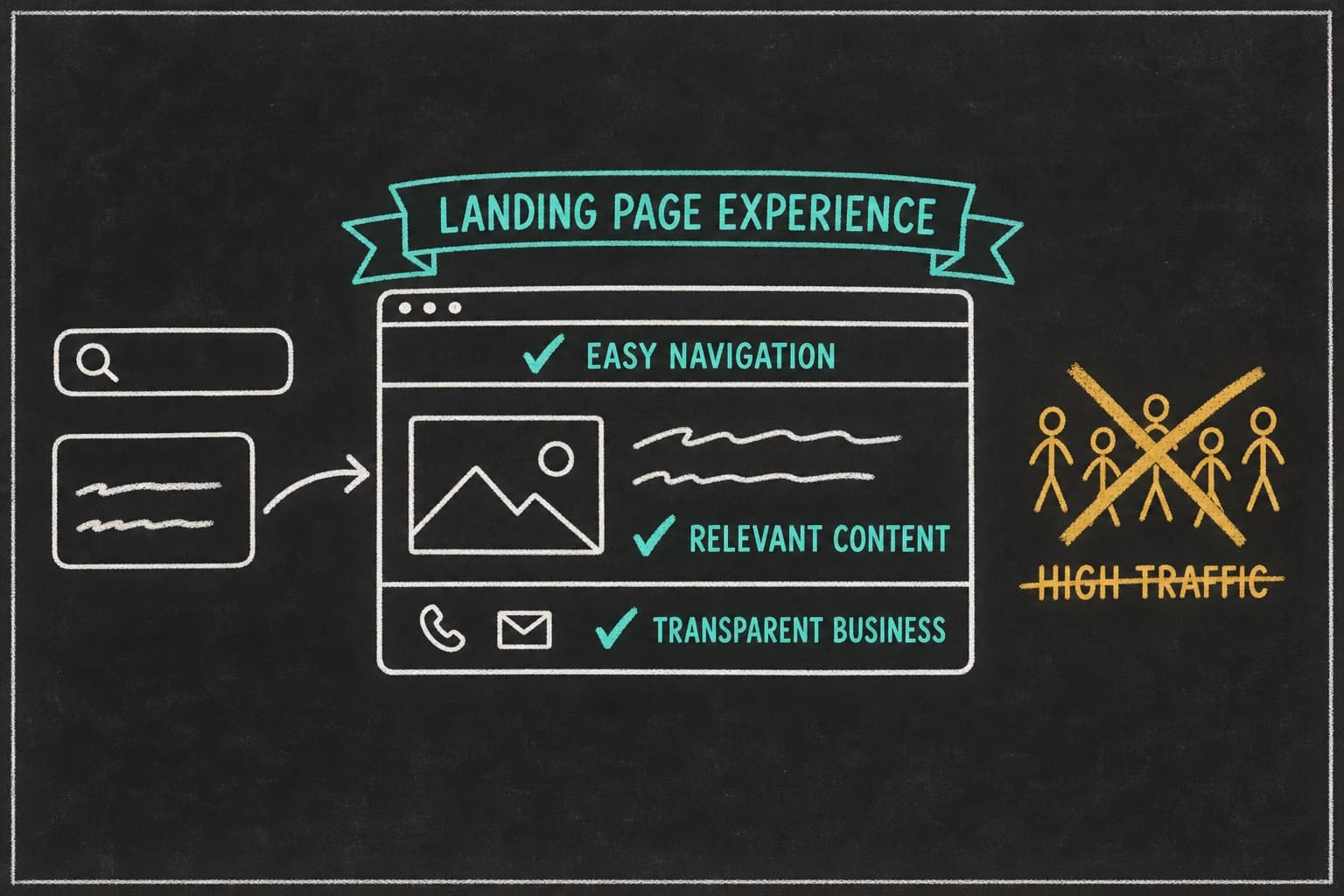
Landing page requirements. Google evaluates landing page experience as one of three components of Quality Score, alongside expected click-through rate and ad relevance. Relevance to the query, transparency, navigability, and page speed all feed it. Quality Score itself is a diagnostic and not an input in the ad auction; the auction uses real-time measurements of those same signals to set Ad Rank, and Ad Rank determines both position and actual CPC. A slow or mismatched page doesn’t “raise your CPC” directly; it lowers your Ad Rank, and you pay more to hold the same position. The page has to load fast and say what the ad said.
Microsoft Advertising
Bing, Yahoo, DuckDuckGo, and Microsoft’s own surfaces, plus LinkedIn profile targeting for B2B. The audience skews older and more desktop-heavy, which for some DTC categories (home goods, higher-ticket durable products) is the right audience.
CPC range. Typically below Google Search for the same queries, sometimes by a wide margin, because there’s less competition in the auction.
Best for. Brands already running Google Search. Import the campaigns, adjust bids, and pick up incremental volume at lower CPCs.
Landing page requirements. Same logic as Google: relevance and speed. Microsoft’s quality signals are less documented but reward the same things.
Amazon Ads
Sponsored Products, Sponsored Brands, Sponsored Display, and Amazon DSP. The intent is purchase intent, the highest there is, but the destination is your Amazon listing, not your site.
CPC range. Sponsored Products CPCs typically run from under a dollar to a few dollars, with the most competitive categories well above that. Category variance is large, and your own campaign reporting is the only benchmark that matters for your niche.
Best for. Brands that sell on Amazon and want to defend their listings or win share on category terms. Not a channel for driving traffic to a DTC site; Amazon DSP, which can send traffic off-Amazon, is the partial exception.
Landing page requirements. Your listing is the page. Images, bullets, A+ content, and reviews do the job a landing page does elsewhere. The message-match rule still applies: the ad’s claim has to be in the listing’s first screen.
Social and feed platforms
Interruption platforms. Colder traffic, lower CPCs, and the page has to do the work the query would have done on search.
Meta (Facebook and Instagram)
Still the default first platform for DTC. Meta’s Advantage+ sales campaigns (formerly Advantage+ shopping) automate audience and placement; manual campaigns still exist for buyers who want control. Formats: image, video, carousel, collection, Reels, and Stories across Facebook, Instagram, Messenger, Audience Network, and Threads.
CPC range. Cost per link click (not CPC all) typically under $2 for eCommerce, often under $1, with CPMs as the more common planning metric. Benchmarks vary by vertical, season, and creative quality; Q4 CPMs run well above the annual average.
Best for. Almost every DTC category. Meta’s targeting is broad enough to find demand that doesn’t exist as a search query yet, and its creative formats fit product discovery.
Landing page requirements. Meta has no Quality Score. It does have ad relevance diagnostics (quality ranking, engagement rate ranking, conversion rate ranking) that compare your ad against competitors for the same audience, and it enforces Advertising Standards that apply to the landing page as well as the ad. Pages that mimic news outlets, make claims the ad didn’t, or use restricted health and before/after content get ads rejected and accounts restricted. The practical requirement: the page continues the ad’s story, loads fast on mobile, and doesn’t pretend to be something it isn’t.
Meta is also where competitor research starts. The Ad Library shows you what a competitor is running; the research agent shows you what’s actually getting ad spend and the pages behind it.
TikTok
Short-form video only. In-feed ads, Spark Ads (running existing organic posts, your own or a creator’s with authorization, as ads), and TikTok Shop for in-app checkout. The audience skews younger, though it has broadened. Creative burns fast; a winning ad on TikTok has a shorter life than on Meta.
CPC range. Similar to or below Meta for most DTC categories. CPMs are usually the planning metric.
Best for. Visual, demonstrable products with a creator-content angle: beauty, gadgets, food, apparel. Weak for products that need a long explanation the video can’t carry.
Landing page requirements. TikTok traffic is the coldest and most mobile of any major platform. The page has to load fast on a phone, open on the same hook as the video, and get to the point before the visitor swipes back. Long pages lose here; a tight listicle or a short advertorial with the offer high wins.
Visual discovery with a planning mindset. Shopping ads pull from a product catalog; standard pins run as promoted content. Users come to Pinterest to plan purchases, so the intent is warmer than Meta or TikTok but the timeline is longer.
CPC range. Generally low, often below Meta, with lower volume.
Best for. Home, decor, fashion, food, wedding, and anything people plan visually. Less useful for impulse or problem-solution products.
Landing page requirements. The pin promised a specific look or item. The page has to show that item first. Catalog-driven product pages work better here than on other feed platforms because the visitor already chose an image.
Promoted posts in feeds and conversation placements inside threads. Reddit users are skeptical of advertising and reward ads that read like the community. Targeting by subreddit is the main lever.
CPC range. Low to moderate, with smaller volume than Meta.
Best for. Products with an enthusiast community: outdoor gear, PC peripherals, hobby supplies, specialist supplements. The subreddit is the audience.
Landing page requirements. Reddit traffic is cold and suspicious. Explanatory pages win: an advertorial that respects the reader’s intelligence, or a listicle that makes a real argument. Hard-sell pages get bounced and, sometimes, mocked in the comments.
Snapchat
Vertical video and AR lens formats, with a younger core audience. Snapchat’s ad platform has matured, with catalog-based dynamic ads for eCommerce.
CPC range. Low, with CPM-led planning.
Best for. Youth-skewed beauty, apparel, and gadget brands with strong vertical creative. Niche for most DTC categories.
Landing page requirements. Same as TikTok: fast, mobile, hook-matched, short.
Programmatic, native, and retail media
The platforms most DTC brands add last.
Programmatic display
Buying banner and video inventory across the open web through a demand-side platform (The Trade Desk, Google’s Display & Video 360, and others). Cheap impressions, low click-through, and usually a retargeting or awareness play rather than a prospecting engine for DTC.
Best for. Retargeting at scale and brand awareness once the core channels are saturated.
Native ad networks and the advertorial connection
Taboola and Teads (formerly Outbrain, which took the Teads name after acquiring it) place ads that look like content recommendations on publisher sites. The format is the ancestor of the modern DTC advertorial: a headline that reads like an article, a click, a page that reads like a story. Native traffic is the coldest there is and only converts on a page built for it, which is why advertorial landing pages exist as a format.
Best for. Brands with a proven advertorial and the margin to test at scale. Supplements, skincare, and considered home goods are the classic categories.
Landing page requirements. A compliant advertorial. Native networks have their own content policies, and the FTC’s disclosure rules apply. A page that pretends to be editorial gets pulled.
Retail media networks
Walmart Connect, Target’s Roundel, Instacart Ads, and the rest. If you sell through those retailers, their ad platforms put you in front of shoppers already in the store. Like Amazon, the destination is the retailer’s listing, not your site.
Best for. Brands with retail distribution defending shelf share.
What each platform demands of your landing page
This is the section no platform guide includes, and it’s the one that decides whether the click converts.
Google’s landing page experience and Quality Score
Scoped to Google Ads search campaigns: Quality Score is a 1 to 10 diagnostic built from expected CTR, ad relevance, and landing page experience. Landing page experience looks at relevance, originality, transparency, navigability, and speed. Improve it and your Ad Rank rises for the same bid, which means better position, lower actual CPC, or both. Speed matters here in a way it doesn’t on Meta. Keep the page fast, keep it about the query, and keep the offer the ad made.
Meta’s landing page policies and claim rules
No Quality Score, but hard policy enforcement. The page can’t make claims the ad didn’t, can’t use restricted before/after or health content, can’t impersonate a publisher, and can’t hide the brand. Violations reject ads and, repeated, restrict accounts. The requirement isn’t a score to optimize; it’s a floor to stay above.
Speed expectations on feed traffic
Feed traffic is mobile and impatient. A page that takes a few seconds to render loses the visitor to the back swipe before the headline loads. Fast, statically hosted pages matter more on TikTok and Meta than anywhere else, not because of an auction signal but because the visitor leaves.
Message match: the requirement every platform shares
Every platform, hot or cold, punishes a page that doesn’t continue the ad’s pitch. On Google it shows up as low relevance in landing page experience. On Meta it shows up as a poor conversion rate ranking and a rejected ad if the claims diverge. On TikTok it shows up as a swipe back.
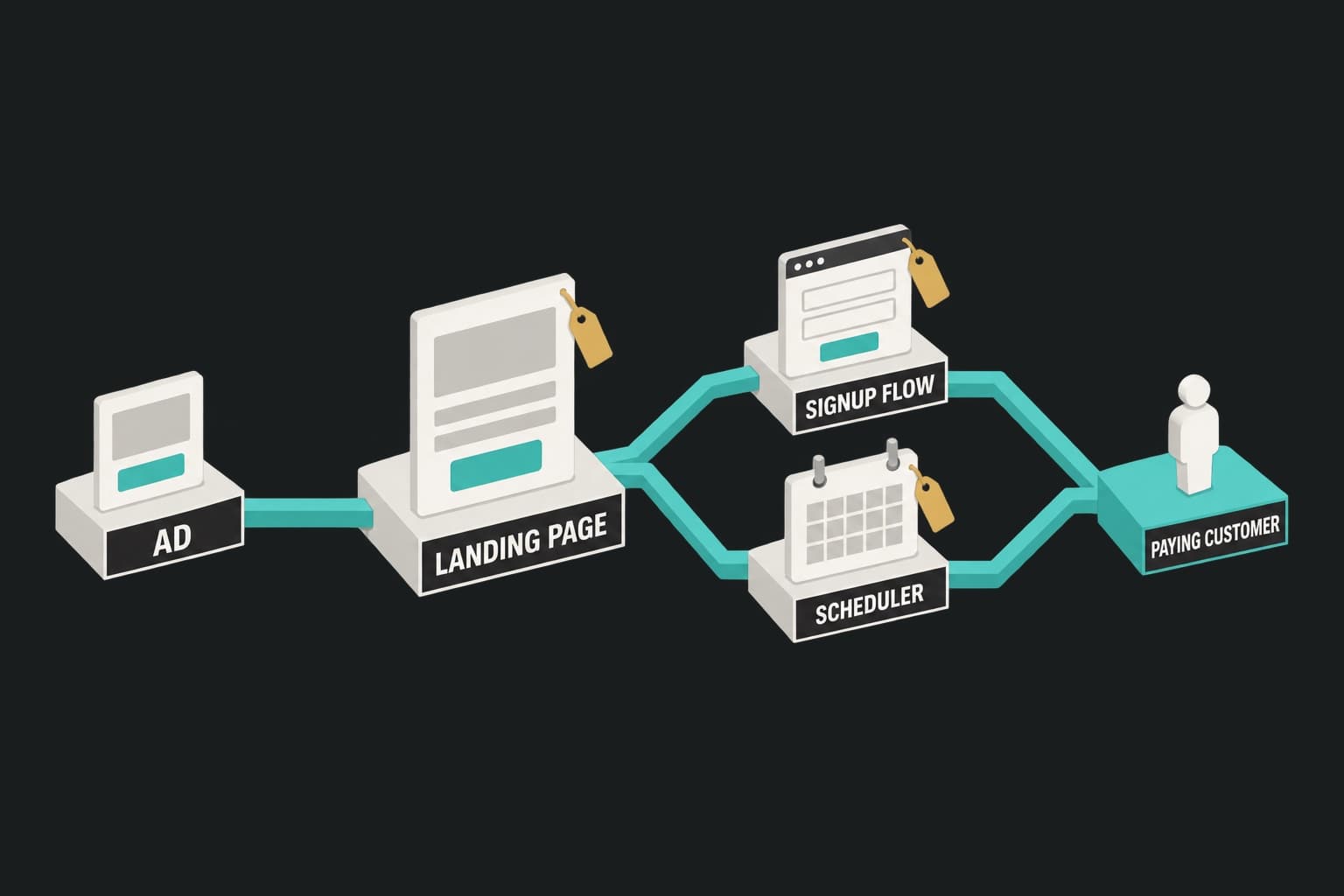
The fix is the same everywhere: a matching landing page for every ad you run. Same offer, same hook, same story. Point Pagedeck at the ad and it builds the page that continues the pitch.
A hypothetical to make the cost concrete. A media buyer named Lena ran a cookware brand on Meta and Google. Meta prospecting ads used a “7 mistakes” listicle hook; Google Search ads bid on the product name. Both sent traffic to the same product page. The Google traffic converted fine, because a product-name search wants a product page. The Meta traffic converted at a third of that rate, because the “7 mistakes” click wanted the seven mistakes and got a price.
She built a listicle page for the Meta angle and left Google on the product page. Meta cost per purchase dropped by 40% in a month; Google didn’t change. Same product, same offer, one page per temperature.
Matching page format to platform
The table that ties it together.
| Platform | Traffic temperature | Recommended page format |
|---|---|---|
| Branded Google Search | Hot | Product page or direct-offer page |
| Retargeting (any platform) | Hot | Offer-led page with the incentive above the fold |
| Non-brand Google Search, Shopping | Warm | Direct-offer landing page; PDP for specific product queries |
| Microsoft Advertising | Warm | Same as Google |
| Amazon, retail media | Warm to hot | The listing |
| Warm | Catalog-driven product page or direct-offer page | |
| Meta prospecting | Cold | Advertorial or listicle |
| TikTok, Snapchat | Cold, mobile | Short listicle or short advertorial, offer high |
| Cold, skeptical | Explanatory advertorial or argument-led listicle | |
| Native (Taboola, Teads) | Coldest | Compliant advertorial |
Cold feed traffic: advertorial or listicle
The visitor didn’t want anything ten seconds ago. The page has to build the want before it asks for the sale. The advertorial does it as a story; the listicle does it as numbered arguments. Both read as content, both earn agreement before the pitch, both end in a buy box. Format guides: listicle landing pages and advertorials, linked above.
Warm search traffic: direct-offer page or PDP
The visitor searched for the category or the product. They want the thing; they need the offer and the proof. A direct-offer landing page with the price, incentive, and buy box above the fold closes faster than a story would. For specific product-name queries, the product page itself often wins. The reasoning is in landing page vs product page for paid ads.
Retargeting: offer-led page
They’ve been to the site and left. The page’s job is to remove the last objection: a discount, a bundle, a guarantee, free shipping. Lead with the incentive. Don’t re-explain the product.
Budget allocation by spend tier
Platform mix follows budget, not ambition.
Under $5K a month: one platform, done properly
Pick one. For most DTC brands that’s Meta, because it finds demand for products people don’t search for yet. For brands with strong category search volume and a known product type, it’s Google Shopping and Search. Spend the whole budget there, build one matched page per ad angle, and learn. Splitting $4K across three platforms teaches you nothing about any of them.
$5K to $25K a month: adding a second channel
Add the complement. Meta-first brands add Google Search and Shopping to catch the demand Meta created. Google-first brands add Meta to create demand beyond what search captures. Keep the page formats distinct: cold-traffic pages for the feed platform, direct-offer pages for search. Retargeting on both.
$25K and up: testing native and programmatic
With a proven advertorial and enough margin, native networks are the next cold-traffic pool. Programmatic display extends retargeting. TikTok becomes worth a real test if the creative team can feed it. Retail media enters if you have retail distribution. Each new channel gets a test budget large enough to reach a decision, usually $3K to $5K over four weeks, and its own matched pages.
Frequently asked questions
What are the best online ad platforms for eCommerce? Meta and Google Ads are the two most DTC brands run first, because Meta creates demand and Google captures it. TikTok, Pinterest, Reddit, and Snapchat follow depending on category. Amazon and retail media apply if you sell through those retailers. Native and programmatic come last, once the core channels are saturated.
Which paid ad platform is cheapest? Feed platforms (Meta, TikTok, Pinterest) have lower CPCs than search. But cheaper clicks are colder clicks, and a cold click needs a page that earns the sale. Cost per purchase, not CPC, is the number to compare.
Do I need a different landing page for each ad platform? You need a different page for each traffic temperature. Cold feed traffic gets a pre-sell page; warm search traffic gets a direct-offer page; retargeting gets an offer-led page. Within a platform, each ad angle should get its own matched page.
Does page speed affect my ad costs? On Google Ads search campaigns, yes: speed is part of landing page experience, an auction-time signal that affects Ad Rank and what you pay for position. On Meta and TikTok there’s no equivalent score, but slow pages lose mobile visitors before the content loads.
Conclusion
The paid ad platforms for eCommerce sort into intent and interruption, and that sorting tells you the traffic temperature before you spend a dollar. Google, Microsoft, and Amazon capture people already looking. Meta, TikTok, Pinterest, Reddit, and Snapchat find people who weren’t. Native and programmatic come last and coldest.
Temperature decides the page. Hot and warm traffic converts on direct-offer pages. Cold traffic converts on advertorials and listicles. Every platform, in its own way, punishes a page that doesn’t continue the ad. Run one platform properly, add the complement when the budget supports it, and build a matched page for every angle on every platform.
Build your first page free, no credit card needed. Point Pagedeck at the ad, on any platform, and it builds the page in the format that platform’s traffic calls for.